Slotorado account access: strengths and limits
The Slotorado login process uses a standard email-and-password credential pair with a session token stored in the browser. No secondary authentication step is mandatory at sign-in. What follows is an assessment of where that setup holds up and where it leaves gaps compared to what the better-secured operators in the same market apply.
What the sign-in flow asks for
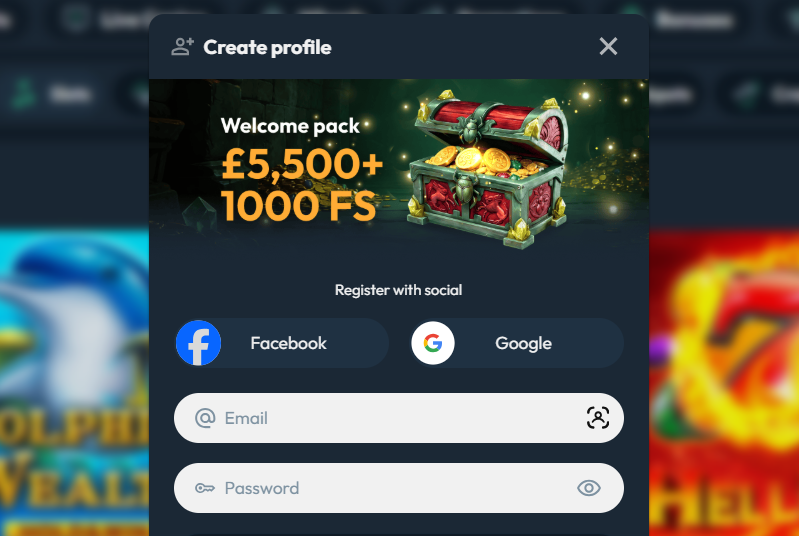
The Slotorado sign in form requests two fields: the registered email address and the password created at registration. There is no mandatory one-time code, no device fingerprint prompt, and no biometric gate on the desktop browser. The mobile app adds biometric login as an optional convenience layer on supported devices. A “Stay signed in” checkbox extends the session token across browser closures until the cookie expires or is manually cleared. The form is accessible from the upper-right header on desktop and the hamburger menu on mobile.
Where access holds up well
Three aspects perform well against market practice.
- Session handling is clean. A token that persists across tab closures reduces repeated logins without leaving the account exposed. It expires on inactivity, adding a time-based control that players do not need to configure manually.
- Device trust through saved browser cookies is lightweight but functional. A returning player on a recognised browser re-enters only credentials — the correct friction level for routine access.
- Multi-device sync is server-side and immediate. A balance or bonus change on desktop reflects instantly in the mobile app. Only one active session runs at a time; a new login on another device terminates the previous session automatically.
Where it frustrates players
The verification gate on first withdrawal is the highest-friction point in practice. Players who deposit and play before completing KYC encounter a 24–48 hour hold on their first payout — documented in the platform’s terms but routinely surprises first-time users.
| Friction Point | Frequency | Workaround |
|---|---|---|
| Inactivity timeout ends session mid-play | Common — threshold not published | Set browser to block sleep mode; use “Stay signed in” |
| KYC verification gate blocks withdrawal after first login | Universal on first payout | Submit documents immediately after registration, not at withdrawal |
| Locked account after failed attempts | Occasional — threshold not published | Use a password manager; reset via email if locked |
| New device triggers full credential re-entry | Every new device or cleared browser | Save credentials in a password manager; enable biometric on the app |
| No push to verify email before exploring lobby | First session only | Complete email confirmation before any deposit |
Password recovery: adequate or awkward
The password reset process is standard: click “Forgot password?” on the login page, enter the registered email, receive a single-use reset link, set a new password. The process works but carries one structural weakness: the reset link’s validity window is not published. If the link expires before the player acts on it, they must request a new one — which is a minor friction point that a stated expiry time (even “valid for 60 minutes”) would eliminate.
Recovery becomes genuinely awkward only when the registered recovery email address is no longer accessible. At that point, identity must be established through KYC documents via support, and the resolution timeline is not published. Operators that offer a phone-based fallback or a security question layer handle this scenario faster.
Security measures against sector practice

What is in place: SSL encryption on every session, session token expiry on inactivity, account lockout after repeated failed login attempts, biometric login option on the mobile app, and device recognition that flags new login sources.
What is not confirmed as available: mandatory two-factor prompt authentication via authenticator app or SMS, hardware security key support, login notification emails to the registered address when a new device accesses the account.
Two-factor authentication is available at a significant share of licensed operators in the same market segment. Its absence here means the account’s security rests entirely on the strength of the password and the security of the registered email. That is a browser cookies acceptable baseline but below the current best practice for accounts that can hold a balance.
Bottom line on Slotorado account access
The sign-in setup is functional and covers the standard cases without problems. Device recognition, session handling, and multi-device sync work correctly. The verification gate on first withdrawal is the most significant practical friction point, and it is avoidable by completing KYC immediately after registration rather than at the point of first payout. The absence of mandatory two-factor authentication is a measurable gap against operators that have adopted it as a default. Password recovery is adequate for standard cases and cumbersome only when the registered email is no longer accessible.
Points readers query most
Is two-factor authentication offered at all?
Not confirmed as available. Check the account security settings after login for any 2FA or authenticator options.
Does access work before verification completes?
Yes. Email confirmation enables login and lobby access. KYC is required before the first withdrawal, not before the first session. Full steps are on the how to register page.
How long does a session stay open?
The inactivity timeout threshold is not published. The session ends after a period of no registered input and also closes when a new login is made on a different device.